 Miracle AcademyThe Hidden Context
A Field Dossier
The lines you already know flip in their original context.
Famous teachings of Jesus and the Buddha, each one read in the culture and language it was written in — then pushed further, into what that unlocks in your inner life. Same words. Different meaning. Once the context is in the room.
A line you already know.
You have heard this line a hundred times. You think you know what it means. You don't. There is a move that changes a line. You keep the words. You add the context the words were written in. And the meaning flips. This is that move, applied to the lines everyone quotes — from Jesus, and from the Buddha. And every line goes one step further, into what the flip unlocks in your actual inner life.

- Take any line you think you know.
- Find the culture it was written in.
- Find the language it was written in.
- Let it flip.
- Then go further — what does the flip unlock in your inner life?
How a line flips — and goes further.
Every entry below runs the same five steps. The teaching — the line, and where it is from. The surface reading — what most people assume. The original context — the culture, the language, the history the line was written in. The flip — what the line actually says once the context is in. And the go further — what the flip unlocks in your inner life, the move from the text to you. Each entry is graded. Use the filter to see only the lane you trust.

- Documented record — the claim sits on a source we opened this session.
- Engineering inference — the standard scholarly reading of the context.
- Working hypothesis — a reading we are still testing, not yet settled.
The Sermon on the Mount.
Three lines from the Sermon. Each one is a strategy, not a platitude — and each one goes further, into the inner move it unlocks.
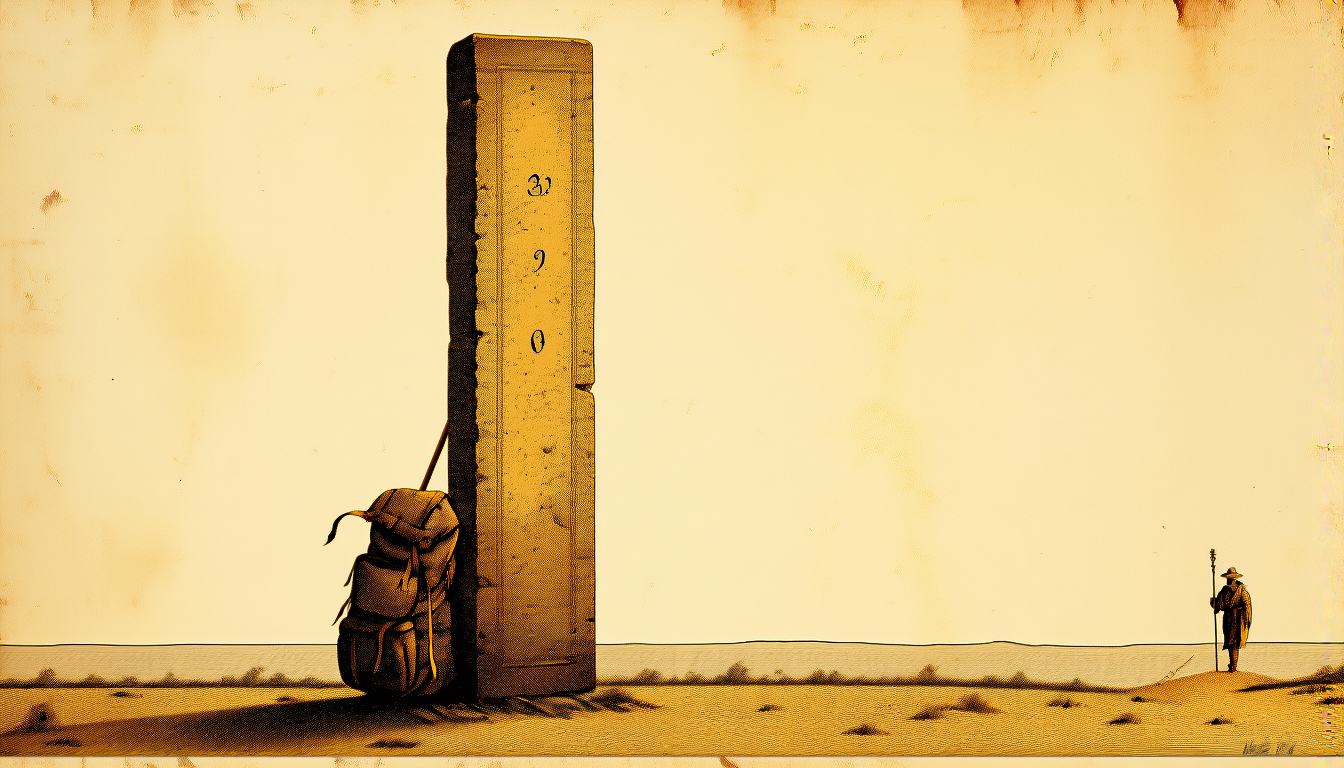
"Turn the other cheek"
Matthew 5:39Surface readingBe a pacifist. Don't fight back.
Original contextA backhand slap to the right cheek was how a superior humiliated an inferior — a master to a servant, a Roman to a subject. Striking with the left hand was itself a disgrace. Offering the left cheek put the aggressor in a bind: hit with the left hand and admit you're an equal, or stop.
The flipIt is not passivity. It is a deliberate act of dignity that forces the other person to see you as their equal.
Go furtherThe slap was never really about the cheek. It was about who gets to write your inner story. When you offer the left cheek, you're not submitting to them — you're refusing to let their humiliation become your inner reality. You take the wound and you choose what it means. Once the outside insult stops getting to run your inner life, the aggressor has lost his leverage. He can strike your body, but he can't strike the meaning you assign to it. It's not passivity. It's the inner freedom to decide what the strike is, and that's where the empire loses its grip on you.
"Go the second mile"
Matthew 5:41Surface readingBe extra generous. Go above and beyond.
Original contextUnder Roman occupation a soldier or courier could compel a civilian to carry his gear one mile — the angaria impressment, echoing the older Persian angareion system (Herodotus 8.98). You could not refuse; the only question was how much you resented it.
The flipGoing the second mile was not a small kindness. It was a public, voluntary act of grace that shamed the system of compulsion — the oppressed person choosing to give more than the empire could demand.
Go furtherThe empire's real tax was never the mile — it was your resentment of the mile. The system works by making you resent the giving, so every act of obedience becomes a small inner death. The second mile breaks that. You give from the inside, not from the compulsion, and the moment you stop resenting the cost, the cost stops costing you. The outside can demand one mile; it can never demand your willingness. So you hand it the one thing it can't tax — your free giving — and the whole system of compulsion comes undone from the inside. It's not a sacrifice. It's the move that turns obligation into grace, and the empire has no leverage on grace.
"The meek shall inherit the earth"
Matthew 5:5Surface readingThe gentle and quiet win in the end.
Original contextThe Hebrew word is ʿanaw (Strong's 6035) — "poor, humble, afflicted, meek." The ʿanawim were a specific group in Israel: the afflicted, dependent poor who trusted God against the odds. The NET Bible renders it "the oppressed."
The flipIt is not a compliment to the soft. It is a promise to the crushed — the ones the world writes off — that they are the ones who will possess the land.
Go furtherThe "meek" are the ones the world has crushed into stillness, and the world reads that stillness as weakness. But the stillness is where the inner war got burned down. You stop fighting the world's version of you, and in that stopping, you stop carrying the inner battle. The earth isn't seized by the loud — it's inherited by the ones whose inner life is no longer at war with itself. It's not that the quiet win. It's that the quiet have already ended the inner fight, so the outside can't take what's already theirs.
The kingdom, the gate, the coin.
Three lines about the kingdom and its borders. Each one goes further, into what the border is actually for.
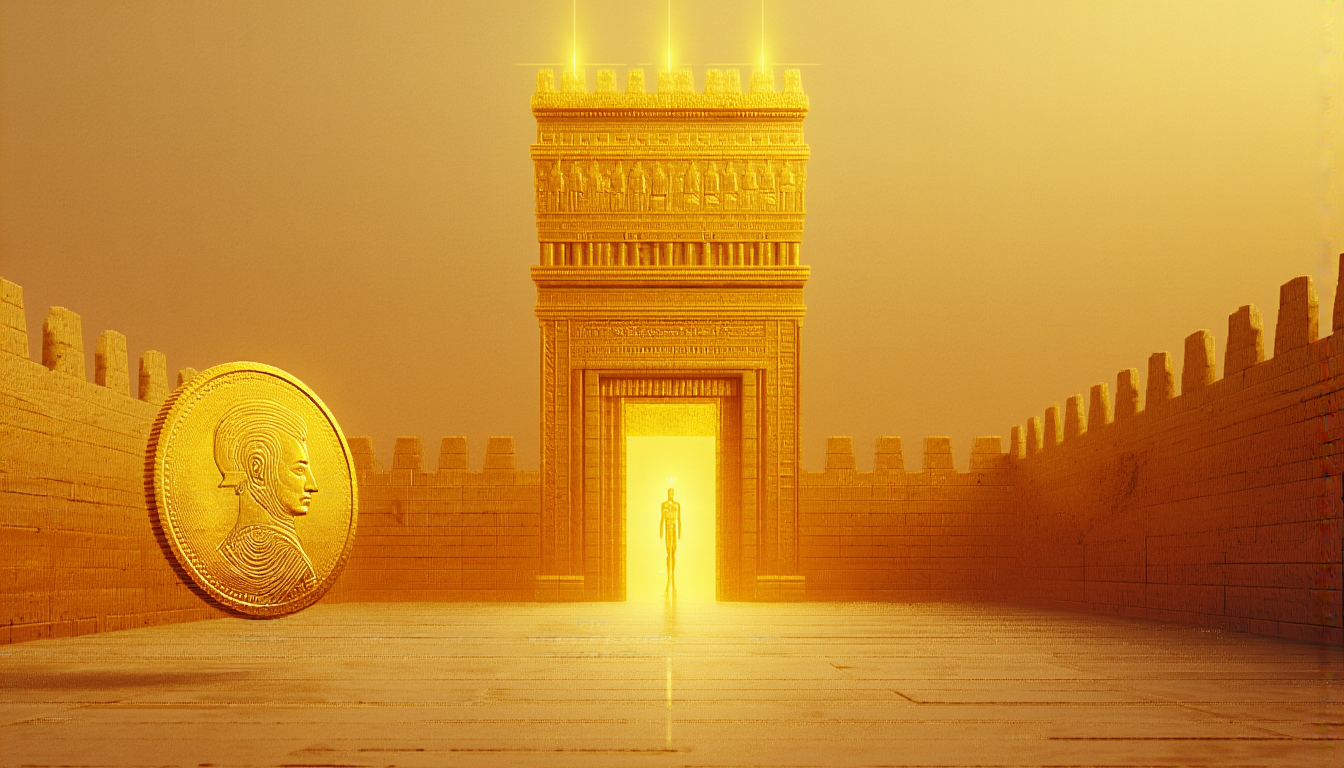
"Render unto Caesar what is Caesar's"
Matthew 22:21Surface readingKeep religion and government separate. Pay your taxes.
Original contextThe coin was the Roman denarius, which carried the portrait and title of the emperor Tiberius on its face. By asking whose image was on it, Jesus made the Pharisees say "Caesar's" out of their own mouths.
The flip"Give back what is stamped with his face" — the coin is the pagan emperor's property, so return it. The unspoken point: you are not stamped with Caesar's image; you are made in God's (Genesis 1:26). The answer puts the tax, and the empire, on the pagan side of the line.
Go furtherThe coin test was never about the tax — it was about whose image runs your inner life. Caesar's face on the coin means the empire's story is what you're carrying around in your pocket, spending it every day. "Render unto Caesar" is you giving the empire back its own story — and keeping the one stamped on you, the image of God. Once you stop carrying the empire's image as your inner identity, its tax stops reaching your center. It's not a separation of church and state. It's the move of refusing to let the outside story be your inner self — you give back what's his, and you keep what's yours.
"The gates of hell will not prevail"
Matthew 16:18Surface readingHell can't beat the Church.
Original contextIn the ancient world a "gate" was the defensive gate of a walled city. A city was not considered taken until its gate was breached — the gate was the point of conquest.
The flipJesus is not describing a door that stays shut. He is describing the Church as a city that hell attacks at the gate and cannot take. The church is the fortress, not the thing being locked in.
Go furtherIf hell is attacking the church and the church is the city, that means it has a body of people. The church protects that body of people, but from the hell that lives inside them. It helps open up the inner attack they carry. The church is a safe space for individuals to resolve the inner hells so that the outside world will no longer prevail. By the way it's not a defensive thing, it's actually a wholesome thing focused on protection and healing.
"The kingdom of God is within you"
Luke 17:21Surface readingGod lives inside your heart. It's all internal.
Original contextThe ancient Syriac versions of the verse read "among you," not "within you." The Greek entos hymōn is contested, and the earliest Syriac witnesses support the "among you" reading.
The flipThe kingdom is not a private inner state. It is a present, external reign — already here, in the room, among the people. That changes "seeking the kingdom" from introspection to participation.
Go further"Among you" is the whole point — the kingdom isn't a place you go to, it's a presence you're already standing in. The outer world keeps trying to sell you a kingdom you have to travel to, earn, or wait for. "Among you" breaks that. The reign is already in the room, in the body of people around you, in the space between you. Once you stop looking for it out there, you stop being ruled by the outer version of it. It's not a private feeling in your chest. It's the move of realizing the kingdom is the shared inner reality of the body — and you're already inside it.
The titles we gave them.
Two titles we added, and one line we translated wrong. Each one goes further, into what the title was actually doing.
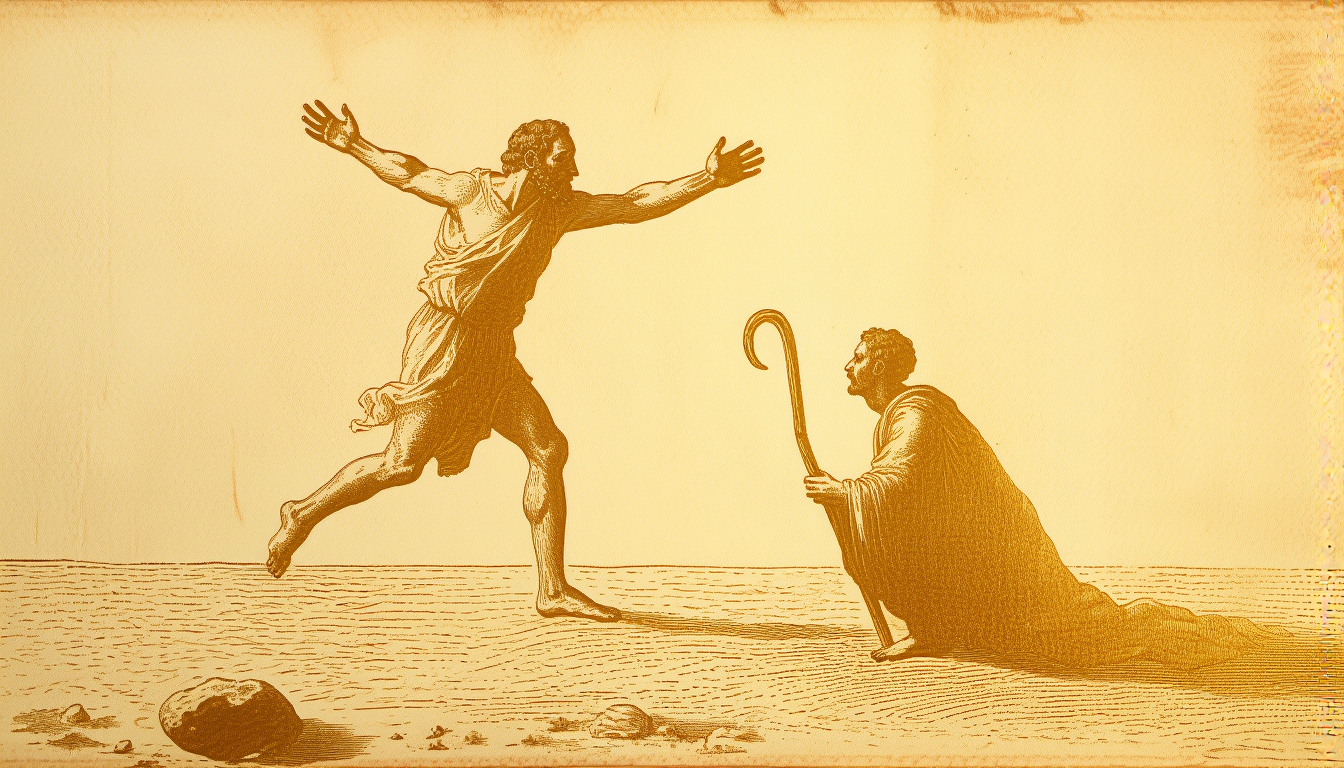
"The Lord is my shepherd"
Psalm 23Surface readingGod is a gentle caretaker who looks after you.
Original contextIn the ancient Near East the shepherd was the king. David was called Israel's shepherd before he was its king, and the royal-ideology literature uses the flock-and-shepherd image for the ruler and the people.
The flipThe psalm is not a lullaby. It is a political statement: God rules, and His rule is the kind that leads, protects, and provides — the king as shepherd.
Go furtherThe shepherd-king isn't a caretaker who watches over you from a distance — he's the one who leads you through the valley and sets the table in front of your enemies. The move is that you stop being your own shepherd, carrying the whole flock and the whole watch. You hand the leading over. The "valley of the shadow of death" isn't a place you avoid — it's the inner dark you walk through with the one who's already there, and the rod and the staff are what keep your inner life from scattering. It's not a lullaby. It's the move of surrendering the leading, so the king-shepherd can do what a shepherd does — lead, protect, and provide for the one who's stopped trying to lead themselves.
"The Prodigal Son"
Luke 15:11–32Surface readingA wayward son comes home and is forgiven.
Original contextThe title "The Prodigal Son" is not in the Bible. It is a later popular title. The parable's center is not the son's fall and return — it is the father running to meet him.
The flipIt is not a story about a son who messed up. It is a story about a father who would run — the scandal in the culture was a father running to a son in the dirt. The subject is the father's love, not the son's repentance.
Go furtherThe story isn't about the son's fall — it's about the father running. In the culture, a father running to a son in the dirt was a scandal, because the father's dignity was his inner armor. The father tears that armor open. The move for you is this: the one who's running is the one who decides your worth, not your fall. You've been carrying the inner hell of "I messed up, so I'm less." The father running is the move that breaks that — your worth was never on the line, your return is. It's not a story about repentance earning forgiveness. It's the move of being met by a love that runs, so the inner hell of "I'm the one who left" ends by the one who never stopped coming.
"In the beginning was the Word"
John 1:1Surface readingGod created everything from nothing at a single point in time.
Original contextThe Aramaic/Hebrew underlying the verse reads "in a beginning" — no definite article. "In THE beginning" is a translation choice that adds a specificity the original does not carry.
The flipThe Word is not the cause of one past creation event. "In a beginning" keeps the creation open — the Word is present in the ongoing act of beginning, which is the basis for reading John 1 as about the present reality, not a distant past.
Go further"In a beginning" — no definite article — means the Word isn't the cause of one past event, it's present in the ongoing act of beginning. That changes where you look for your life. You've been waiting for a creation that already happened, out there, in the past. "In a beginning" says the Word is in the beginning that's happening now — in your next breath, your next choice, the move you're making right now. It's not a distant past you're trying to get back to. It's the move of realizing you're always already in the beginning, and the Word is the one who's beginning you, now, in the present.
The self, the middle, the fire.
Three lines from the Buddha. Each one is a diagnosis, not a mood — and each one goes further, into the inner move it names.
Anattā ("no-self")
Pāli CanonSurface readingThere is no self. You don't really exist.
Original contextPāli anattā is an + attā — "not-ātman." It is a rejection of the Hindu ātman, a permanent, unchanging soul-substance. The term is, in the words of the REHAT study, "a complex Pāli word that cannot be translated into English directly."
The flipThe Buddha was not saying "you don't exist." He was saying "there is no fixed, permanent self" — no unchanging core. Experience, mind, and body are real; what is not real is the idea of a permanent soul behind them.
Go further"Not-ātman" isn't "you don't exist" — it's "there's no fixed core you're defending." And that's the inner freedom. You've been carrying a self — a fixed identity, a story, a set of wounds — and you've been spending your whole inner life defending it. Anattā is the move of putting the defense down. The experience is real, the mind is real, the body is real — but the fixed self you were protecting was the thing causing the inner war. Once you stop defending a self that isn't there, the inner attack has nothing to hit. It's not annihilation. It's the move of dropping the fixed self, so the inner war of "protect me" ends, because the thing you were protecting was never there.
"The Middle Way"
Majjhimā PaṭipadāSurface readingModeration. The happy medium. Avoid extremes.
Original contextThe Buddha's "Middle Way" names a path that avoids two specific extremes he had personally tried: sensual indulgence (kāma) and self-mortification (attakilamathacharya). It is a description of his own discovery, not general advice to be balanced.
The flipIt is not "find the middle." It is "the path between the two dead ends I already tried" — a specific route (the Noble Eightfold Path) that is neither hedonism nor ascetic punishment.
Go furtherThe Middle Way isn't "find the middle" — it's the path between the two dead ends you've already tried: the indulgence that numbs the inner hell, and the self-punishment that feeds it. You've been swinging between those two, and both of them keep the inner attack alive. The Middle Way is the move of stopping the swing. It's the specific path — the Eightfold — that neither numbs the inner wound nor punishes it, but opens it up and lets it end. It's not moderation. It's the move of getting off the swing between the two hells, so the inner attack loses both of its fuel sources at once.
Nirvāṇa / Nibbāna
Pāli CanonSurface readingHeaven. A place of eternal bliss. A mystical state you go to.
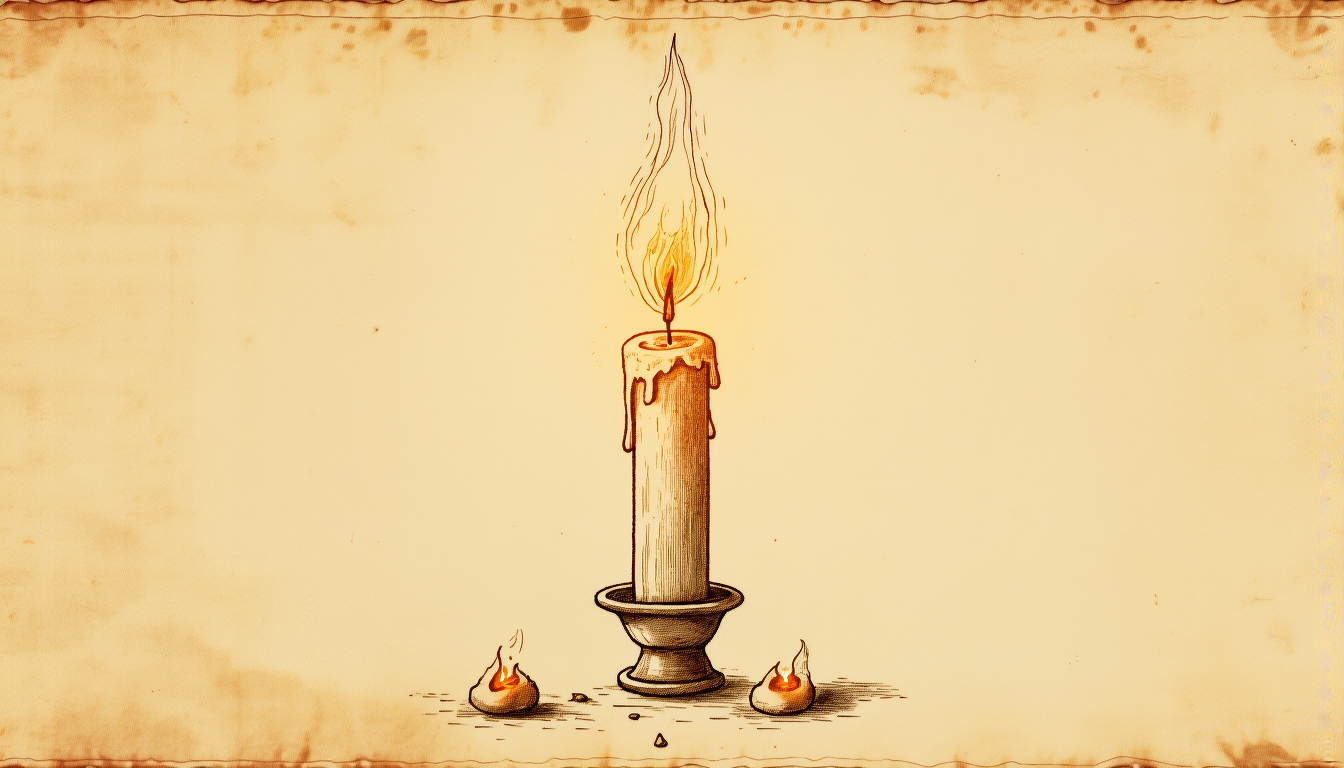
Original contextThe Pāli nibbāna is, in the words of the scholar Rupert Gethin, "literally … 'blowing out' or 'extinguishing.'" It names the cooling of the flame — specifically the three fires of greed, hatred, and delusion. It is an event (the extinguishing), not a location.
The flipNirvāṇa is not a place you go to after death. It is the blowing-out of the burning — the end of the fires that keep re-igniting suffering. That is why the imagery is fire, not paradise.
Go further"Blowing out" isn't a place you go to — it's the inner fire going out. The three fires — greed, hatred, delusion — are the inner hells that keep re-igniting your suffering, and nirvāṇa is the moment they stop re-igniting. You've been trying to escape the fire by going somewhere else. "Blowing out" says the fire was never the place, it was the inner burning — and it goes out when the fuel stops. It's not a heaven you earn. It's the move of the fires going out, so the inner burning of "always burning" ends, and what's left is the cool, the quiet, the end of the re-igniting.
The suffering, the friend, the teacher.
Three more. The word for suffering, the word for love, and who the Buddha actually claimed to be. Each one goes further, into the inner move it is.
Dukkha ("suffering")
First Noble TruthSurface readingLife is suffering. Buddhism is pessimistic.
Original contextPāli dukkha is broader than "suffering" — it covers unsatisfactoriness, unease, stress, the fundamental instability of conditioned experience. The Four Noble Truths are structured as a medical model: diagnosis, cause, prognosis, and the treatment plan.
The flipThe Buddha was not complaining that life is bad. He was a physician diagnosing a condition, naming its cause, and prescribing a cure. The First Noble Truth is a clinical observation, not a mood.
Go furtherDukkha isn't "life is bad" — it's the inner instability of everything conditioned, the unsatisfactoriness that no outer fix ever lands. You've been treating it like a problem to be solved out there — more money, more status, more experience. The Four Noble Truths are the move of treating it like a diagnosis: here's the condition, here's the cause (craving, the inner grip), here's the prognosis (it can end), here's the treatment (the path). It's not pessimism. It's the move of a physician who names the inner condition so it can be treated, instead of you spending your life chasing outer fixes for an inner cause.
Mettā ("loving-kindness")
Pāli CanonSurface readingBe loving. Spread the love. Feel good about everyone.
Original contextPāli mettā is etymologically related to mitta, "friend." It is not a sentimental emotion or a "be nice" instruction — it is a specific meditative practice (mettā bhāvanā) of cultivating goodwill, taught by the Buddha in the Pāli Canon as a trainable mental factor.
The flipMettā is not a feeling you have. It is a practice you do — a disciplined cultivation of friendliness toward all beings, with a method and a goal (the dissolution of ill-will), not a vague vibe.
Go furtherMettā isn't a feeling you have — it's the inner practice of cultivating friendliness toward every being, including the one in the mirror. You've been waiting to "feel" loving, and the feeling never comes on schedule. Mettā is the move of doing the cultivation — the specific meditation that trains the mind to hold goodwill, with a method and a goal (dissolving the inner ill-will). It's not a vibe. It's the move of building the friendliness from the inside out, so the inner war of "I'm at war with everyone, including me" ends by the one practice designed to end it.
"The Buddha" as a god
Historical framingSurface readingBuddha is a deity you worship to get blessings.
Original contextHistorically, the Buddha (Siddhārtha Gautama) was a teacher who taught a method — the Dhamma — and explicitly did not claim to be a god. He pointed to a path and a result, not to his own divinity.
The flip"Buddha" is a title meaning "the awakened one," not a name of a god. The teaching is a method to be practiced and verified, not a figure to be prayed to. Worship of the Buddha developed later in the traditions; it is not the original claim.
Go furtherThe Buddha wasn't a god you pray to — he was a teacher who handed you a method and told you to verify it yourself. You've been treating the teaching like a figure to be dependent on, a god to hand your inner life over to. The move is taking the method and running it on your own inner life. The Dhamma is a path to be walked and verified, not a deity to be worshipped. It's not that the Buddha was wrong to be revered later — it's that the original move was never "trust me," it was "test it." And that's the move that keeps your spiritual life from becoming another inner dependency — you verify the path on your own inner ground, and that's where it's real.
The same move, twice.
You have done this move before. Two readings that run the same method — the original language opening a door the English translation closed. Both go further, into the same inner move.

"The map, not the bouncer"
John 14:6Surface reading"No one comes to the Father except through me" is a gate — everyone else is locked out.
Original contextRead as a parable in its first-century setting, the line names a way, not a door. The Aramaic/Hebrew idiom points to a path of revelation, not an exclusive checkpoint.
The flipJesus is the map, not the bouncer. The line opens the way to the Father; it does not close every other door. That is the reading the duality brands "other religions are liars" depends on getting wrong.
Go further"No one comes to the Father except through me" reads like a bouncer — a gate, a checkpoint, everyone else locked out. But as a parable in its setting, it's a map. The move is that Jesus is the way, not the door. He's the map that shows you the route to the Father, not the bouncer who decides who's allowed in. Once you stop reading it as a gate, you stop carrying the inner hell of "am I allowed?" The map doesn't exclude you — it orients you. It's not a checkpoint. It's the move of taking the map and walking the way it shows, so the inner attack of "I might be locked out" ends by the one who's the route, not the gate.
"In a beginning"
John 1:1Surface reading"In THE beginning" — one closed creation event in the distant past.
Original contextThe underlying Aramaic/Hebrew has no definite article. "In a beginning" is open and ongoing; "in THE beginning" is a translation choice that adds a specificity the original does not carry.
The flipThe Word is present in the ongoing act of beginning. John 1 reads as the present reality, not a distant past — the same move as every line in this dossier.
Go furtherThis is the same move as every line in this dossier. Read the line in its original context, and the meaning flips. "In a beginning" is the move that keeps the creation open, present, ongoing — the same move as "the map, not the bouncer," the same move as the gates of hell, the same move as anattā. The context is the expansion. The famous line is the compression, and the original is where the door opens.
Go read the original.
The move is yours now. Take any line you think you know. Find the culture it was written in. Find the language it was written in. Let it flip. Then go further — what does the flip unlock in your inner life? That is the whole method: the compression, the expansion, the flip, and the move into you.